


Speech Delivered on the 16th July, 2026
Topic: The Supreme Court and the Institution of Chieftaincy: The Past, The Present and the Future
Salutations
The Honourable Chairperson;
Your Royal Majesty Otumfuo Osei Tutu II, Asantehene;
The Honourable Attorney-General and Minister for Justice, Dr. Dominic Akuritinga Ayine;
The President of the Ghana Bar Association, Mrs. Efua Ghartey;
My Lords and My Ladies, Justices of the Superior Courts of Justice;
The Chairman and Members of the Supreme Court @150 Planning Committee;
The Honourable Ashanti Regional Minister, Dr. Frank Amoakohene;
The President of the Ashanti Regional Bar, Mr. Kwame Owusu Sekyere Esq.;
Nananom;
Members of the Diplomatic Corps;
Distinguished Traditional Leaders;
Members of the Bench and the Bar;
Members of the Academia;
Distinguished Invited Guests;
Members of the Media;
Ladies and Gentlemen—
Opening
Your Majesty,
Some palaces call us to speak. Others call us to remember. But Manhyia asks us to do both.
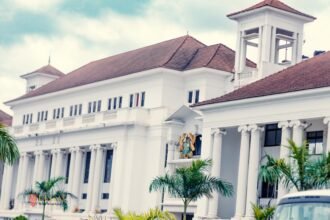
This is not merely a palace. It is a living archive of our people’s memory. Its walls have witnessed generations come and go. They have seen triumph and sorrow, conflict and reconciliation, and those quiet moments when history turned on the wisdom of those entrusted with leadership. Here, yesterday is never entirely gone. It walks gently beside today and whispers to tomorrow.
That is why it feels deeply fitting that, as we mark one hundred and fifty years of the Supreme Court of Ghana, one of our first major reflections should take place right here — not in a courtroom, but in a palace.
For before justice wore robes, it wore wisdom. Before judgments were printed in law reports, they lived in the memories of elders. And before our courts stood in stone and mortar, justice often sat under trees, where truth was patiently sought, wrongs carefully weighed, and peace restored — not because one side had won, but because the community had been made whole again.
The forms have changed, Your Majesty, but the calling has not. And it is at this meeting point that the Supreme Court and the institution of chieftaincy find each other.
One speaks through the Constitution. The other through custom. One draws its authority from the Republic. The other from the deep wells of history. Yet both exist for the same enduring purpose: to preserve justice, secure peace, and protect the dignity of every person.
Honourable Chair, one hundred and fifty years ago, a seed was planted. Those who planted it could not have imagined us gathered here today beneath its branches. They simply believed that justice deserved an institution that could outlast any single generation.
Those who came after, watered that seed with learning, strengthened it with courage, pruned it through difficult decisions, and shielded it when storms came. Slowly, it grew into a tree — a tree whose shade now stretches across our entire Republic.
We honour those who nurtured it — not because they were perfect, but because they understood that institutions must outlive individuals. Their greatest legacy was not just the judgments they wrote, but the character they gave this Court.
Every generation leaves its fingerprints on the institutions it inherits. Some strengthen them. Others weaken them. History always tells the difference.
Our generation now holds both the privilege and the burden of stewardship. The baton is in our hands. We did not start this race, and we will not finish it. Our duty is to run faithfully — to preserve what must be preserved, to reform what needs reform, and to hand over a stronger Court to those who will come after us. That is how great institutions endure.
Your Majesty, the institution of chieftaincy understands this truth perhaps better than most. Its strength has never rested in age alone, but in its remarkable ability to carry yesterday into tomorrow without letting yesterday imprison tomorrow — to remember without becoming rigid, to evolve without forgetting who we are, and to remain rooted while still reaching higher.
Every enduring institution must constantly answer the same difficult question: How do we remain true to ourselves while becoming better? That question faces the Judiciary today just as it faces traditional authority.
As we celebrate this milestone, we do not gather merely to admire how far we have come. Milestones matter because they remind us how far we still have to go. The greatest chapter of the Supreme Court must never be the one already written — it must always be the next one.
That is why today’s lecture is so important. Its subject goes beyond law. It is about the continuing conversation between two ancient and respected institutions that have shaped the conscience of our nation.
One has spoken through stools. The other through benches. Both have answered the same human longing: that justice must be stronger than power, that authority must answer to principle, and that no society can truly thrive unless its people believe fairness still has a home among them.
Nananoom, as Chief Justice, I come today not only to celebrate the Court’s history, but to express deep respect for the enduring contribution of the institution of chieftaincy to the peace and stability of our Republic. Many disputes that could have burdened our courts are resolved quietly in our communities through wisdom, patience, and reconciliation. The law recognises this role, and our nation continues to benefit greatly from it.
As we look to the next one hundred and fifty years, I pray that these two great institutions will continue — each within its constitutional mandate — to strengthen one another in the common pursuit of justice.
For justice has never belonged to judges alone. It belongs to the people. We only hold it in trust. And trust, built over generations, must be guarded with the greatest care.
The greatest inheritance of the Supreme Court is not its buildings, nor its history, nor even its judgments. It is the confidence of the Ghanaian people — the quiet assurance that when they enter our courts, justice will not ask who they are before listening to what they have to say.
May that confidence never fade away. May that trust never be betrayed. And may those who come after us find the tree still standing — its roots deeper, its branches wider, and its shade even more generous than when it was placed in our care.
Your Majesty, distinguished guests, ladies and gentlemen, I warmly welcome you to this important lecture and wish us all fruitful reflections.
May God bless His Majesty Otumfuo Osei Tutu II. May God bless the institution of chieftaincy. May God bless the Supreme Court of Ghana. And may God continue to bless our beloved homeland, Ghana.
I thank you.