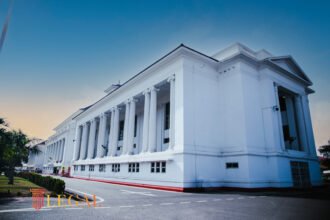



Court of Appeal, Civil Appeal No. H1/239/2013 | Judgment delivered on 13 March 2014
Introduction:
What must a person seeking to prove a disputed Will establish where the Will is challenged on the grounds that the testator lacked testamentary capacity and that the document was not his free act and deed? In particular, when can a testator be said to be compos mentis and capable of making a valid Will?
Facts:
The late Joseph Borketey Manison died on 21st January 2006. The Plaintiffs were the executors named in a Will dated 16th May 2001, which purported to be his Last Will and Testament. About one and a half years after his death, members of his family attended the reading of the Will at the High Court Registry, Accra.
The Defendant, acting on behalf of the children of the deceased’s first wife, challenged the Will and filed a notice requiring the Will to be proved in solemn form. The Plaintiffs accordingly commenced an action seeking a declaration that the Will dated 16th May, 2001 was the true and last testament of the deceased and an order admitting it to probate.
At the trial, the Plaintiffs called witnesses, including the lawyer who prepared the Will, one of the attesting witnesses and the executors. Their evidence was that the deceased personally instructed the lawyer to prepare the Will, approved a draft, executed it in the presence of witnesses and was physically and mentally fit at the time. The lawyer testified that the deceased “could speak clearly without any mental blemish.”
The Defendant relied principally on the evidence of a psychiatrist, Dr. J. J. Lamptey, who testified that when the deceased was brought to him, his memory, concentration and judgment were impaired, he was confused and disoriented, and appeared highly vulnerable to suggestion.
The High Court accepted the Defendant’s case and held that there was direct evidence that the deceased lacked testamentary capacity and that the Will was not his free act and deed. The Court therefore set the Will aside. The Plaintiffs appealed on the sole ground that the judgment was against the weight of the evidence.
Issues for Determination:
- Whether the Will dated 16 May 2001 was the true Will and last testament of the deceased.
- Whether the deceased was of sound mind at the date of the Will.
- Whether the deceased executed the Will in accordance with the requirements of the law.
- Whether the Plaintiffs were entitled to the reliefs sought.
The Court’s Holding:
The Court of Appeal, by majority, allowed the appeal and held that:
- The evidence of the lawyer who prepared the Will established that the deceased personally instructed him to prepare the Will, approved the draft and executed it in the presence of two attesting witnesses. That evidence was corroborated by other witnesses.
- The Plaintiffs discharged the burden of proving due execution of the Will and testamentary capacity. The Court held that the Will had been duly attested in accordance with the Wills Act, 1971 (Act 360).
- The Defendant failed to establish that the deceased was non compos mentis at the time he executed the Will. The Court adopted the definition of compos mentis as being “master of one’s self, master of one’s mind, having use of and control over one’s mental faculties” and found that the deceased possessed those qualities when he made the Will.
- In assessing testamentary capacity, the Court considered the deceased’s conduct, including his ability to organise the execution of the Will, travel to his lawyer’s chambers, direct witnesses, operate bank accounts and conduct his affairs. The Court held that such conduct was inconsistent with the activities of a person who was not compos mentis.
- The Court further held that the various misspellings, inaccuracies and misdescriptions in the Will did not invalidate it. Applying the principle of falsa demonstratio non nocet (the rule that false or incorrect description in a legal document does not invalidate it, as long as the intended person or thing can still be clearly identified), the Court held that mere misdescription does not invalidate a testamentary gift where the person intended by the testator can still be identified.
- Upon examining the signatures appearing on the Will and other documents executed by the deceased, the Court concluded that the Will had indeed been signed by the deceased.
Accordingly, the Court set aside the judgment of the High Court and upheld the validity of the Will.
Implication of the Decision:
The decision reaffirms that where a Will is challenged, the propounders must satisfy the Court that the document represents the testamentary wishes of a competent testator and that it was duly executed in accordance with the law. It also demonstrates that allegations that a testator was non compos mentis must be supported by convincing evidence and that minor inaccuracies, misspellings and misdescriptions will not invalidate a Will where the intention of the testator remains clear.
Significant Quote:
“The duty of a Court must be to give effect to the last wishes of every Testator and admit his Last Will and Testament to Probate where there is as in this case due execution.”
– Mrs Magaret Welbourne, J.A.
Commentary and Insight:
This case underscores the central importance of testamentary capacity in the making of a will and in probate litigation. The Court emphasised that a person propounding a Will must establish that the document represents the testamentary wishes of a competent testator and that it was duly executed in accordance with law. In determining whether the deceased was compos mentis, the Court examined not only the medical evidence but also the surrounding circumstances, including the deceased’s conduct before, during and after the execution of the Will. The decision also affirms the reluctance of the courts to invalidate a Will on the basis of mere inaccuracies, misspellings or misdescriptions where the evidence demonstrates that the document truly embodies the wishes of the deceased