


Introduction
To be persuasive we must be believable; to be believable we must be credible, to be credible we must be truthful.
One thing that is clear is that lawyers must be competent argument constructers and dismantlers. The ability to construct arguments is the core of the legal profession; be it oral or written arguments. It is not enough to merely construct arguments; a good lawyer must learn to construct a good argument if he is to persuade a decision maker to pass a judgment in one’s favour. A good argument has a range of meanings but all revolve around the concept of proving the validity of a view. To argue involves bringing reasons to support or deny a proposition. It involves maintaining that something is the case by the bringing of reasons to prove that it is so. To engage in the process of argumentation is to deploy, methodically, a series of justification and reasoning through the mediating influence of language, both oral or written. Language is flexible and undoubtedly moulds the law and determines outcomes. A good lawyer must master the art of persuasion – what I call championing the journey from problem to solution. Effective persuasion hinges on understanding the legal context, audience and the power of the narrative. This essay explores techniques for building persuasive arguments highlighting the balance of the law, evidence and storytelling.
Good Argument Construction
When dealing with legal problems, good argument construction takes place through the medium of the interpretation and application of legal rules to problems that have been pre-classified as legal problems. The journey to construct a good argument requires a map that others can follow in order to get to the desired destination that the crafter of the argument intends. This map must eloquently explain why it is not a good idea to take one side of the road or the other alternative route. The map that the lawyer draws with his arguments must explain why and how, if the context and background were different, another route could have been taken. What lawyers forget is that this beautiful map detailing the journey from a problem to a solution cannot be embarked on without proper preparation. Though many people hate to hear the word “preparation”, the process of preparation must be enjoyed and endured so as to set a tone for lifelong success which produces good results. Good preparation develops in a lawyer the skill of competently identifying the nature of the problem. It also helps the lawyer develop the ability to competently locate potential relevant legal rules and secondary texts to support one’s argument. Furthermore, preparation helps the lawyer evaluate the problem within context so as to draft the potential solution to the problem.
Arguments and Logic
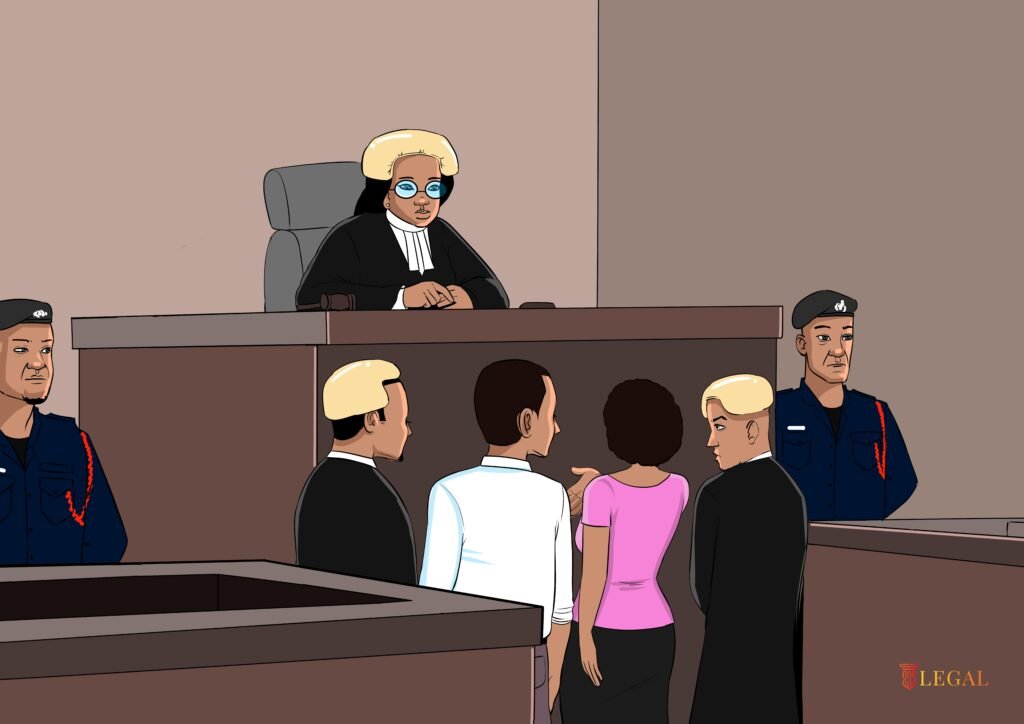
Despite the difficulties, it is essential that lawyers are able to fully engage in the process of effective reasoning in order to construct good arguments. In the court room context, both parties put forward arguments and the judge chooses the argument that is either the most persuasive or that is the closest to the judge’s own belief concerning the outcome of the case. It is generally believed that lawyers are well skilled in the art of reasoning and are people who argue logically. Logic connotes separating the relevant from the irrelevant in order to arrive at an objective conclusion based on an objectively devised formula. Being logical sometimes means not being susceptible to emotions when arguing or easily changing one’s mind when subjected to little pressure or confusion. Lawyers must support their arguments and statements with evidence and must consider how to weigh evidence on a scale of weak to strong. A lawyer must make a proposition or assertion about something and must defend it such that a particular conclusion may be correctly obtained from the proposition presented in the process of reasoned argument.
Conclusion
In conclusion, crafting compelling arguments is both an art and a science critical to success in Ghana’s legal arena. Lawyers who master the blend of factual clarity, legal rigor and persuasive storytelling effectively sway decisions in courts, negotiations, and policy spaces. By understanding the legal context, anticipating counterarguments, and communicating with empathy, lawyers enhance their persuasive impact. The art of persuasion, honed through practice and insight, enables lawyers to drive justice, protect rights and shape Ghana’s legal landscape. As the legal profession evolves, the ability to craft and deliver compelling arguments remains a timeless skill for impactful advocacy.
God bless!